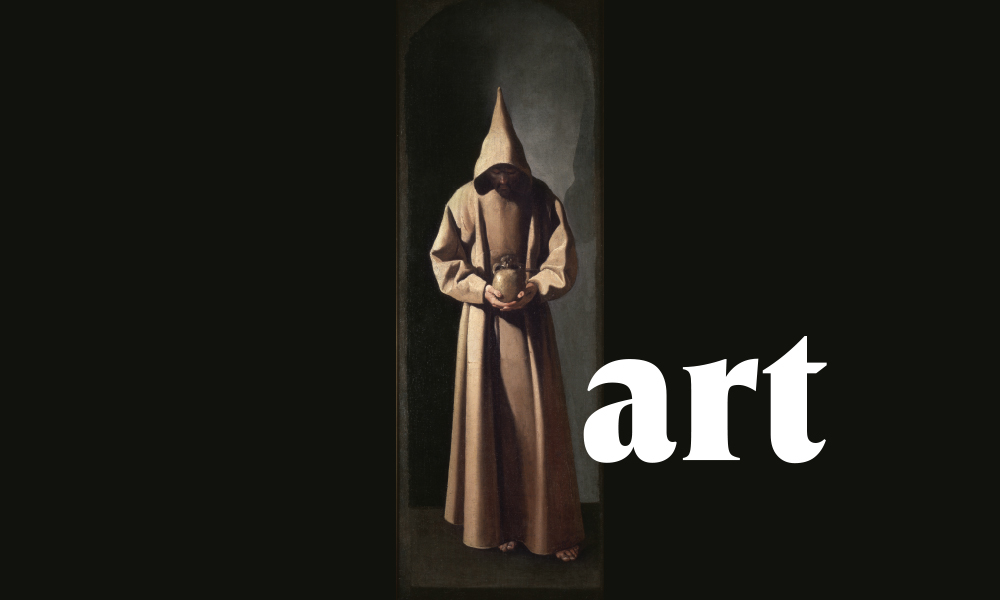
Saint Francis Contemplating a Skull by Francisco de Zurbarán (1598-1664)
Saint Louis Art Museum
Saint Louis Art Museum
Arresting in its starkness, Francisco de Zurbarán’s Saint Francis Contemplating a Skull demands more time in contemplation than many more narrative depictions of the saint’s life.
Arresting in its starkness, Francisco de Zurbarán’s Saint Francis Contemplating a Skull demands more time in contemplation than many more narrative depictions of the saint’s life.
In his signature simplicity of composition, Zurbarán places St. Francis on a three foot tall, oil-painted stage without any backdrop or sense of space, only the strong, partial illumination of tenebrism. Entering the drama, the viewer seeks the identity of this monk, and failing to see the face, matches his gaze, discovering the object camouflaged against the Franciscan habit to be surprisingly morbid.
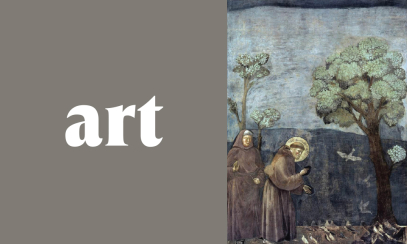
To Zurbarán’s contemporaries, there may have been no surprise; not only was the 17th century Christian more closely acquainted with death, memento mori was a frequent theme in Baroque art, from Dutch vanitas still-lives to more personal depictions of death. A call to the eternal over temporal, this genre often carries a sense of urgency. Zurbaran’s work is fascinating in that it balances dramatic elements with a quality of serenity. St. Francis’ features are obscured, but we can catch a softness in his expression and posture. Lacking further narrative to scrutinize, we turn to the interior: what movements in his soul elicit a loving gaze upon death? What prayers spring from a saint? The same Francis who preached to birds and sang the Canticle of the Sun spent time with Christ in His Passion, bearing the stigmata in the hands here cradling a skull with a gentle tenderness. Zurbaran reminds us of more than mortality — he reminds us that the saints died to themselves on earth in order to live eternally in Christ. The challenge to imitate them is simple: one can’t escape death; let us die, then, so to live.