Parable – The Leaven by John Everett Millais
Date: circa 1860
Medium: watercolor on paper
Dimensions: height: 5.3 in; width: 4.2 in
Collection: Aberdeen Art Gallery
Date: circa 1860
Medium: watercolor on paper
Dimensions: height: 5.3 in; width: 4.2 in
Collection: Aberdeen Art Gallery
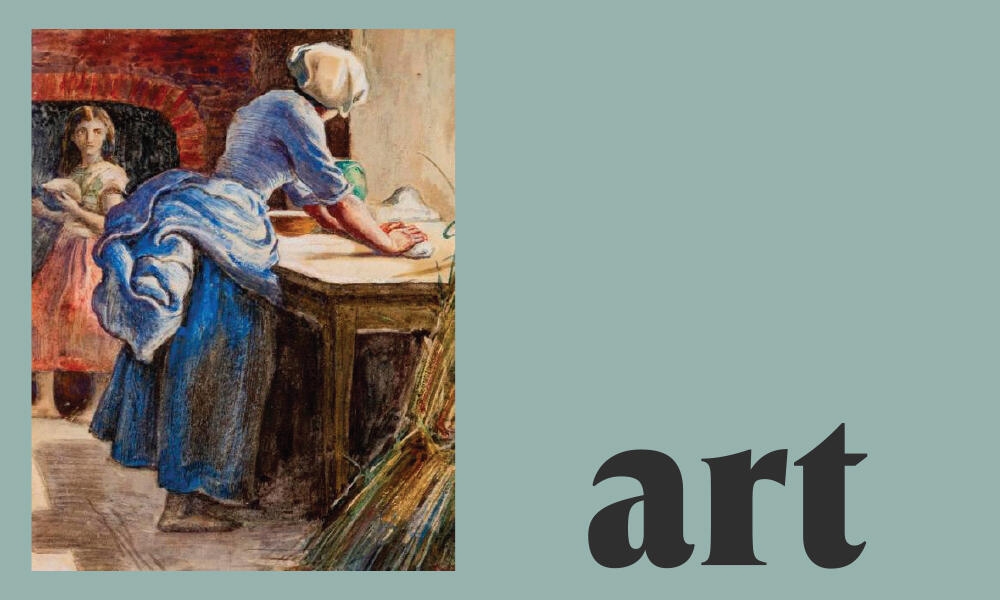
Sir John Everett Millais, an English artist in the mid 19th century, was commissioned to produce 20 wood-engraved illustrations for a book of Christ’s parables. A prodigy capable of the high ideals of the pre-Raphaelite Brotherhood he helped to found, Millais nonetheless took seven years to complete the project, noting, “I can do ordinary drawings as quickly as most men, but these designs can scarcely be regarded in the same light — each parable I illustrate perhaps a dozen times before I fix [the image]." This watercolor study reveals part of that process, helping the viewer enter into the mystery of the Parable of the Leaven.
“The kingdom of heaven is like leaven, which a woman took and hid in three measures of meal, til it was all leavened.” (Mt. 13:33) The image, in its primary colors, is as simple and essential as the parable: wheat, work surface, woman. Mystery, however, enters in as the eye is drawn by composition (and highlight in the final engraving) to the only visible face. The viewer senses that the young girl’s participation in making the bread, and her trust in the hidden efficacy of the leaven she holds, is critical to the artist. The work of the woman — experienced, anonymous — is a duty, here made beautiful. As the leaven alters the dough, she is transformed by her work, becoming an agent of change and of grace. Even more than the receptivity in the child’s face, the work itself affirms that the Christian’s catechismal mission will flourish, by grace and in good time.