The Calling of Saint Matthew
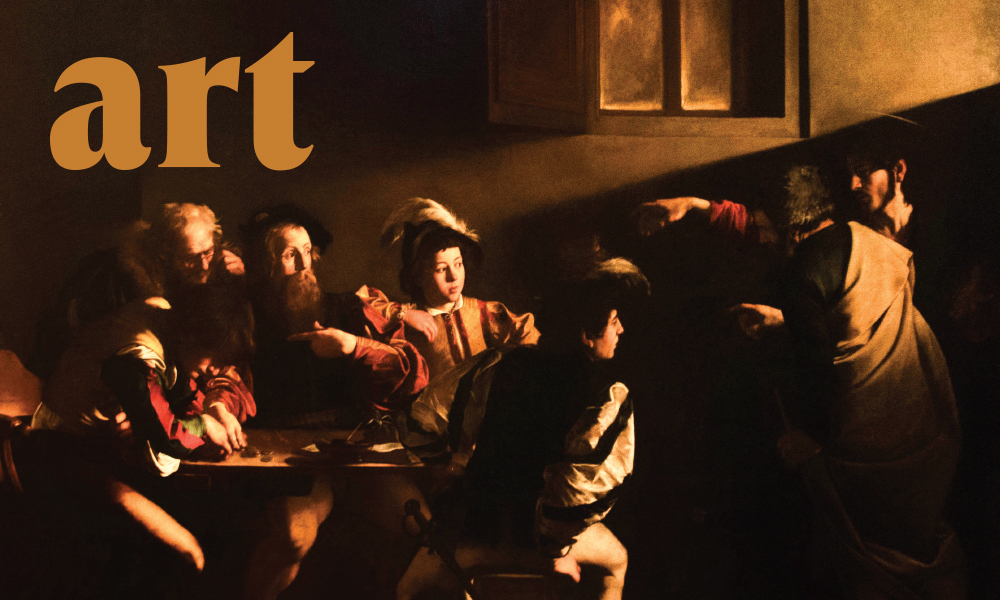
Caravaggio’s The Calling of St. Matthew hangs in the Contarelli chapel in Rome alongside two other scenes from the saint’s life: his inspired writing of the gospel and his martyrdom. Completed at the turn of the 17th century, it is a study in Baroque style and the nature of conversion.
Caravaggio’s The Calling of St. Matthew hangs in the Contarelli chapel in Rome alongside two other scenes from the saint’s life: his inspired writing of the gospel and his martyrdom. Completed at the turn of the 17th century, it is a study in Baroque style and the nature of conversion.
Painted in oil on a 10 foot square canvas, The Calling hangs to the left of the altar, perpendicular to the chapel’s only natural light source. Caravaggio allowed the environment to deepen the drama of the image: the extreme contrast between light and shadow, termed “tenebrism,” draws the eye powerfully to St. Matthew, seated among tax collectors. St. Matthew points to himself, confirming that it is he whom the Lord seeks. His expression contains surprise and perhaps some hesitancy as he still fingers the coins, but the gospels tell us that this struggle was overcome, even instantly: “As Jesus passed on from there, he saw a man named Matthew sitting at the customs post. He said to him, “Follow me.” And he got up and followed him.” (mt 9:9) The human movement captured in this moment — the half turned companion, Matthew’s slight retraction, and the preoccupation of the money-counter — is anticipated and completed by Christ’s divine gesture, mirrored by St. Peter at his side. Like Michelangelo’s Creation of Adam, Christ has his Father’s ability to bring new life into his disciples. Matthew’s first movement of following Christ opens the door to grace and grows into great apostolic activity before culminating in martyrdom. By depicting this earliest moment of his discipleship, Caravaggio reminds us sinners that holiness really can be black and white: we need only follow Christ.