Saint Francis of Assisi by Giotto di Bondone
The name of Giotto may be as beloved by the art world as is the name of Francis is by the faithful. Both figures are remembered for transitions: Giotto, for shepherding art from the medieval to the Renaissance, and Francis, for leaving a life of luxury to pursue poverty. Born in the late 12th and early 13th centuries, respectively, both were born into a climate of change, a new era in Christendom — one of prosperity, confidence, and delight in beauty.
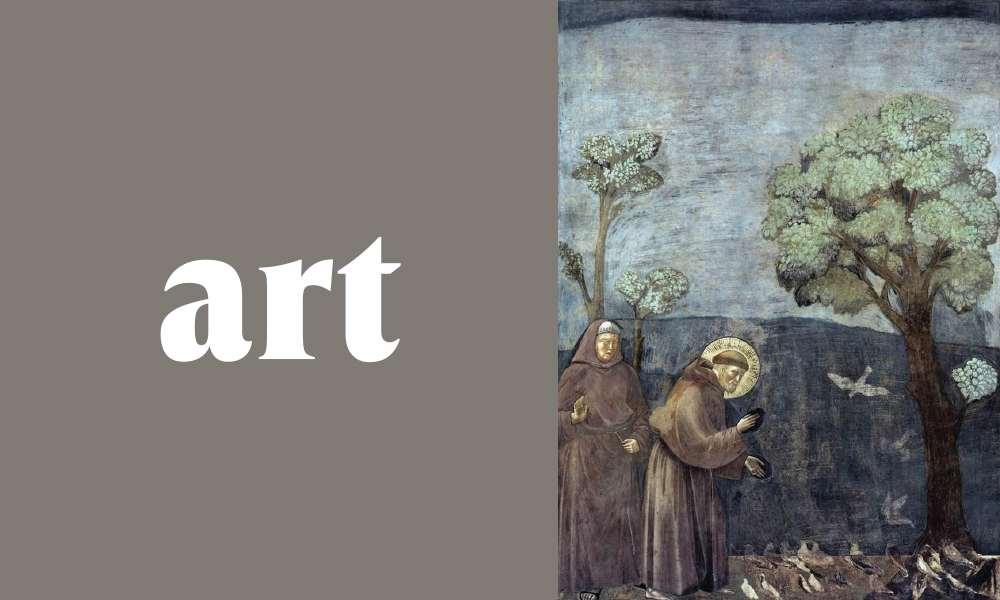
St. Francis’s journey to detachment and spiritual freedom began with privilege followed by captivity, conversion, and disinheritance. His imitation of Christ and love of poverty and nature became pillars of his spirituality. Francis chose self-gift over possession, losing even his eyesight but gaining the stigmata. His love for all creation can be discovered in his Canticle of the Sun, which praises God for each of his creations. Francis’ special affinity for animals is remembered in the story of the wolf of Gubbio and in the scene shown here, The Sermon to the Birds. To Francis, the sister birds were as worthy of time as any creature.
Giotto’s fresco, one of 28 depicting the life of Francis in the Basilica of San Francesco, Assisi, was created around 1300, 70 years after the saint’s death. Giotto’s style of naturalism, which introduced solidity of form, expression, and space into a linear Byzantine world, is the perfect match for the life of this simple friar. It declares that realities observed and lived in the natural world are more than sufficient — that the true and the beautiful are real wealth. Like Francis’ canticle, it praises God in his creation. Together with St. Francis and his companion, radiant Brother Sun, serene Brother Wind and sustaining Mother Earth are brought to life in these pigments, which seem to sing with Francis in praise of the Creator Spirit.