
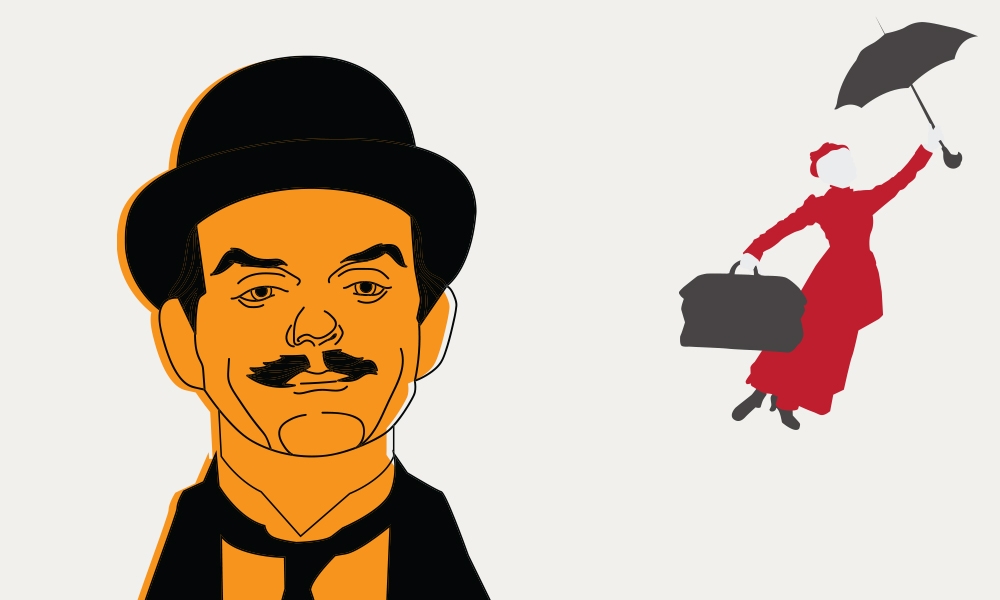
Mary Poppins
In 1934, P. L. Travers released the first of eight children’s books about a magical English nanny named Mary Poppins. Walt Disney adapted the story into the 1964 film, now remembered for its catchy music, or for Julie Andrews’ impeccable soprano, magical carpet bags, or even silly animated penguins. But look closer; Mary Poppins is really about Mr. Banks and fatherhood. The 2013 film Saving Mr. Banks (starring Tom Hanks and Emma Thompson) chronicles the story behind the making of this classic movie and explores how Travers’ own father influenced the story. That’s a good movie for more mature audiences, but Mary Poppins is timeless and appropriate for all ages.
In 1934, P. L. Travers released the first of eight children’s books about a magical English nanny named Mary Poppins. Walt Disney adapted the story into the 1964 film, now remembered for its catchy music, or for Julie Andrews’ impeccable soprano, magical carpet bags, or even silly animated penguins. But look closer; Mary Poppins is really about Mr. Banks and fatherhood. The 2013 film Saving Mr. Banks (starring Tom Hanks and Emma Thompson) chronicles the story behind the making of this classic movie and explores how Travers’ own father influenced the story. That’s a good movie for more mature audiences, but Mary Poppins is timeless and appropriate for all ages.
Mr. Banks (David Tomlinson) believes his life is practically perfect in every way. He’s built an exemplary image around himself. But something is missing, and today it’s the children. They’ve run off again. Why? Because there is no joy in the Banks home (though this hardly bothers Mr. Banks, who finds inexplicable happiness unsettling). What contents him is order. He’s ruled by his own mental cages of efficiency and status, at the cost of presence. He provides very well for his family and ensures they have structure. He isn’t a villain; he’s doing what he believes is best. His mistake is confusing duty with love, and structure with relationship. The fragile balance between order and joy begins to crack when the new nanny pops in.
Mary Poppins (Julie Andrews) isn’t here to babysit the children. She arrives to help you get back on course — not unlike our Blessed Mother herself! She’s not a fairy godmother, but a kind of divine inconvenience. She doesn’t come to overthrow Mr. Banks, but to reveal him to himself. Her magic is ordered toward revealing the truth, goodness, and beauty the household has overlooked. Every song is calibrated to expose what’s broken, and nothing she does is fluff. She just finds the element of fun along the way.
“All around the cathedral the saints and apostles look down as she sells her wares. Although you can’t see it, you know they are smiling each time someone shows that he cares.”
Mary encourages Mr. Banks to bring his children to the bank, where they encounter a distorted father figure who is the inversion of everything the joyful Bert (Dick Van Dyke) represents. When Mr. Banks finally recognizes the truth and beauty of his children’s joy, he shares a killer joke, causing the corrupted patriarch to laugh for the first time. Mr. Banks then repairs his home, symbolized by a mended kite, and his relationship with his children becomes lighter than air.
Mary Poppins is not mere escapism or children's entertainment, but an examination of conscience. Can we see past the end of our own nose? Or are we so bent on decorating our material cages that we confuse what's important to man with what's really important?
The last thing Mary Poppins ever says to the children before she leaves: “Now run along, children, and listen to your father.”
Run Time: 2h 19m
1964, color
Family/Musical
Rated G