
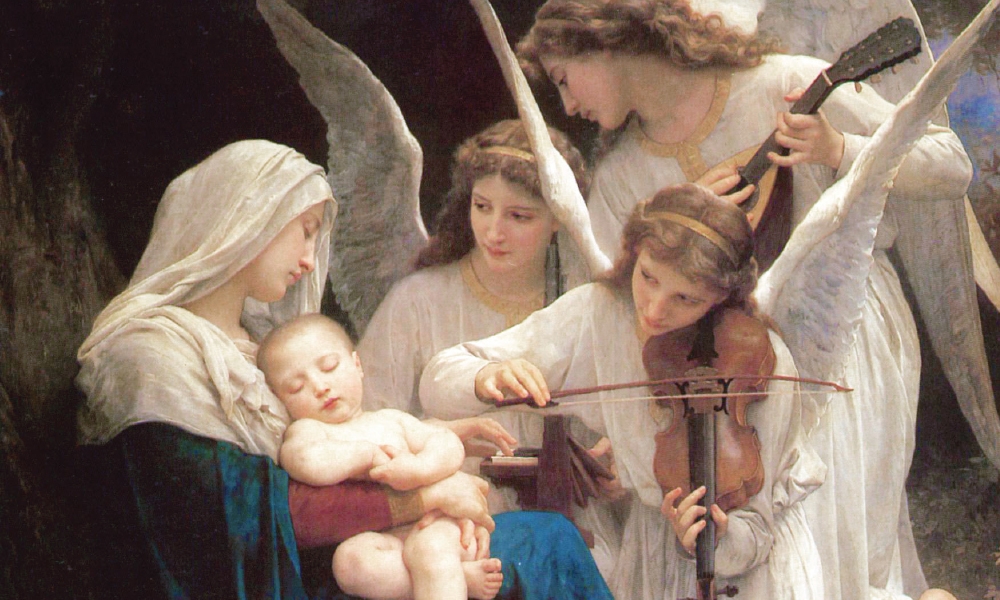
Marian antiphons every Catholic should know
It being the month of May, in which we particularly celebrate the Mother of God, it seems appropriate for us to focus on the four Marian seasonal antiphons. Every Catholic should know them — and sing them every night of the year.
It being the month of May, in which we particularly celebrate the Mother of God, it seems appropriate for us to focus on the four Marian seasonal antiphons. Every Catholic should know them — and sing them every night of the year.
Before attempting to convince you of this bold claim, I should tell you what the four seasonal Marian antiphons are. In short, they are four beautiful and ancient prayers to the Blessed Virgin Mary. They are sung each night at the conclusion of Compline (Night Prayer in the Church’s Liturgy of the Hours). They are sung in their original Latin — the universal language of the Church — in a simple melody of Gregorian Chant, which the Second Vatican Council calls a “treasure of inestimable value.”
In my own house, we have sung these antiphons with the kids for years at the end of our nightly prayers. Now that the kids are a bit older, we recite Compline together — it only takes five minutes — and then sing the appropriate Marian Antiphon. As the Church moves through the four general seasons of the liturgical year, we shift with the season to the next antiphon. The four Marian antiphons are:
- Alma Redemptoris Mater — Advent and Christmas (ending on Candlemas);
- Ave Regina Coelorum — Lent (goes until Easter);
- Regina Coeli — Easter;
- Salve Regina — Ordinary Time (beginning after Pentecost).
Of these antiphons, the Salve Regina (“Hail Holy Queen”) is likely the best known since we commonly recite this prayer in English at the end of the rosary. But in recent years, it’s become more common for Catholics to hear these chants. My own parish now regularly sings the seasonal Marian antiphon at the end of Mass before the recessional hymn.
So why should every Catholic know and sing these Latin antiphons every night? First, out of love and devotion to the Blessed Virgin Mary. In short, we should say good night to our Blessed Mother each night. Next, as a restoration of Catholic culture. We Catholics need shared traditions and shared songs — and not only among English-speaking Catholics, but among all Catholics. When we all know and sing the same nightly Marian antiphon, we are not only more connected to the Virgin Mary and her Divine Son, it’s also an act of communion with our fellow Catholics, both locally in our parishes and around the world. And when all Catholics can know and sing these antiphons by heart, we can easily sing them in other settings as well: at processions, pilgrimages, and in parishes far from home.
So how do we learn them? Don’t let the Latin or the chant notation scare you. The melodies are simple and easily learned, whether by children or adults. And since you’ll be singing them every night throughout a particular liturgical season, you’ll learn quickly by repetition. I recommend listening to a recorded version on YouTube. There are many options, including a great series of videos called Sing with the Pope, published by the Vatican, that includes tutorials for three of the four Marian antiphons (it appears the Alma Redemptoris hasn’t been published yet). When searching for tutorials, look for the “simple tone” for each chant, which is the more common melody as opposed to the “solemn tone.” Sheet music for each chant is on the accompanying page and can also be easily found and printed from the internet.
May these ancient chants deepen your love for Our Lady and bind you more closely to her Divine Son, Jesus Christ, and his Church!