Hope for the Hopelessly Bitter
There is something salutary about the month of November. As we celebrate the feast of the Holy Souls and remember family members and friends who have passed away, the inevitability of death and the fragility of human life are what become present to our minds.
There is something salutary about the month of November. As we celebrate the feast of the Holy Souls and remember family members and friends who have passed away, the inevitability of death and the fragility of human life are what become present to our minds.
When I was 17 years old, back in the Pleistocene Epoch, I took a summer job as an orderly in a geriatric hospital. It was a sobering experience, since most of the patients were simply there to eke out their last few months before their inevitable end. Few of them had visitors, and a number of the men had fought in the Great War.
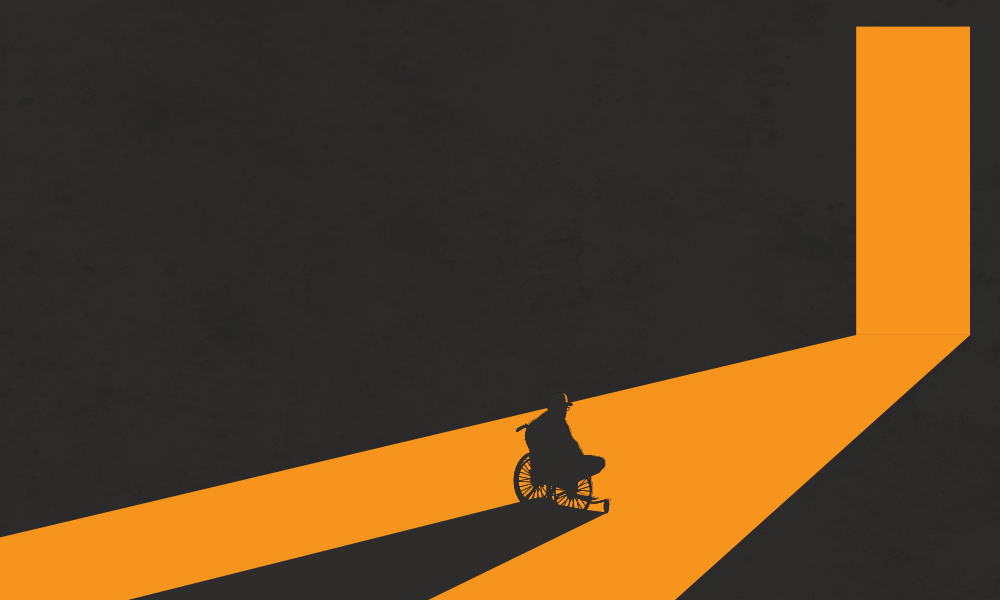
One particular resident carved a hole in my memory. Jim was several decades younger than the rest, had had both of his legs progressively amputated due to gangrene, was a hemophiliac, and was the most bitter human being I have ever met. His conversation was so larded with expletives that, most of the time, it was difficult to dig up any nuggets of sense from his minefield of invective. He cursed anyone who tried to help him, and he had plenty to say about the state of the world, politics, religion, education, and any other social contract or establishment that had the effrontery to exist without his say-so.
I remember thinking that Jim’s chances of salvation were firmly in the negative. How could someone who was so rancorous and unpleasant possibly hope to reach heaven when his end eventually arrived — which it did only a few weeks later? In my all-knowing 17-years-oldness, I was certain he had no chance of squirming out of a forced march to the nether world.
I was wrong.
In The Dialogue of St. Catherine of Siena, God the Father reveals to Catherine that a person who truly desires mercy at the point of death can receive the grace of Christ's sacrifice on the cross and be saved. The repentant thief who was executed with Jesus is a prime example of this astonishing dynamic.
This message from God the Father would be of great comfort to the family and friends of the cantankerous if it wasn’t for the coda. The Father also warns that to rely on the possibility of a deathbed conversion is really presumption. God is merciful if we ask him for mercy. But there is no guarantee that we will have time to repent when the end comes, nor that we will even feel regret for our evil ways. “Let nobody be so foolish at life's end,” the Father says, “hoping to set his soul in order, because it is not certain that I, due to his obstinacy, may say in consonance with my divine justice: ‘You did not remember me during your life, when you had time. I do not remember you now at the point of death!’" Worse still, we may consider that our sins are so great that God’s mercy can’t make a dent in them. That is the sin of despair, and it is the final refusal of God’s grace. Such was the predicament of Judas Iscariot.
These truths may seem a far cry from the God of love we are accustomed to. Are we to comply with God’s moral stipulations only out of fear? Not at all. St. Catherine informs us that at the point of death, the Evil One makes a concerted effort to remind us of our past sins, in the hope that we will despair. She advises strongly that we should cling to the knowledge and the promise that God’s gentle love is infinite, kind, and forgiving.
We may never know what happens to someone at the point of death. The greatest reprobate on the planet still has hope of redemption through Jesus Christ’s death and resurrection. When it comes down to it, none of us really merits heaven through good behavior anyway. “Since all have sinned and fall short of the glory of God; they are now justified by his grace as a gift, through the redemption that is in Christ Jesus.” (Rom 3:23-24) Our hope is in Jesus.
This is one of the many reasons I can’t presume to consign poor Jim to the fires of hell. Did Jesus not die for him, too? Was he not a beloved son of God the Father? Did he repent and ask for God’s mercy before the end?
It is because of God’s mercy that all of us can have hope of heaven. But let’s not wait till our lives are hanging by a thread. Let’s live in that hope now. When we daily call to mind that a ransom was paid for our souls, we counter the lies of the Evil One who insists that we are too damaged to be saved. If we live in that hope of mercy, we need have no fear of being irrevocably turned away from the gates of paradise when we pass from this life.
Lastly, of your charity, please pray for the repose of Jim’s soul.