Grace in Grief
Turning Grief into Love in Action
Turning Grief into Love in Action
It was a weekday summer evening like many others.
It was a weekday summer evening like many others.
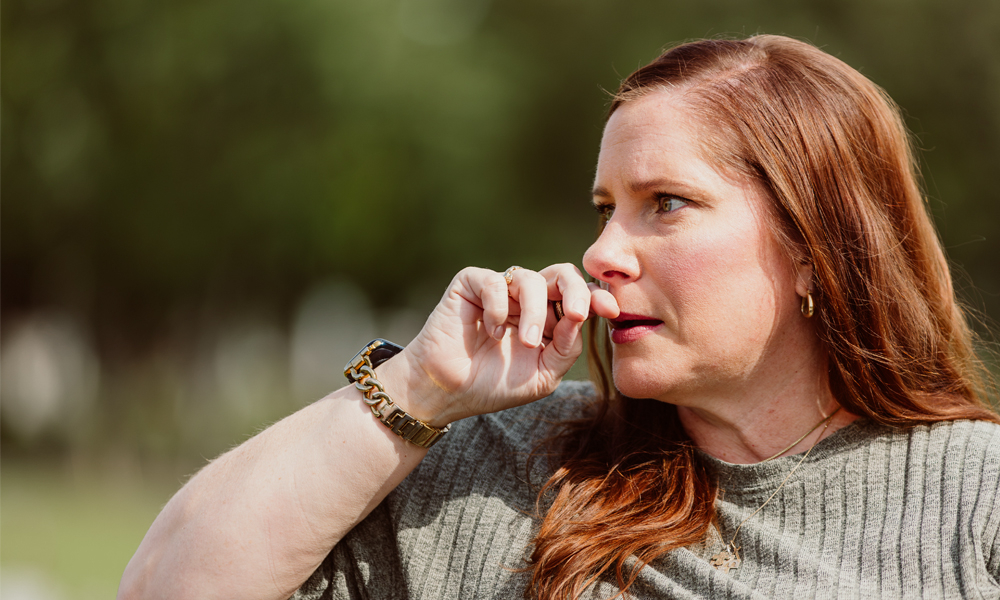
Dawn Nowlan of Charlotte had gone out to dinner with a friend on July 16, 2025, and returned home. Minutes later, her husband, Shea, began having trouble breathing and soon had a seizure. She yelled for her daughter to call 911, and Shea was rushed to the emergency room.
“It was out of nowhere; we didn’t see it coming,” she says. “He was fine and then he wasn’t.”
After suffering another seizure in the emergency room, Shea passed away. In a span of hours, Dawn went from having a normal day with her husband and children to becoming a widow. Her family later learned that Shea suffered from hereditary protein S deficiency, which causes blood clots. Shea’s lungs were filled with clots at the time of his death, she says, but he had not had any symptoms until the sudden onset of difficult breathing and seizures.
Dawn and her two college-aged children, Samuel and Jillian, were suddenly thrust into an entirely new world without their husband and father. In those first few weeks, Dawn says, she relied on her faith, family, and friends to support her.
“My faith has never wavered, which is fortunate and somewhat surprising, because I see it in almost every grief group I'm in,” Dawn says. “I’m grateful that my faith has stayed steadfast. That doesn’t mean it hasn’t been extremely painful. It didn’t take away the pain. I think it made it survivable.”
In addition to her faith, Dawn says what gave her the most comfort after Shea’s death was the support of her close family and friends who showed up to be with her and who continued to support her in the months that followed.
For example, on Shea’s birthday in February, several of her friends went to where he is entombed at Maple Hill Cemetery, shoveled a path to the columbarium where he rests, and prayed a rosary for him.
“I see the presence of God in my friends,” she says. “When we feel heavy, I know they’re praying for us. I know our god squad is around. They’re our armor. It makes the load a little lighter to carry.”
While many people in her life helped after Shea’s death by simply showing up, being with her, dropping off coffee or food, or praying with her, many others — while trying to be helpful—said all the wrong things.
“People would say the strangest things to me,” she says. “I realized very quickly that we are horrible in our culture when faced with death. We avoid it. You don’t realize until you’re in it, but if you don't know what to say, just don’t say it.”
Dawn says statements like “he’s in a better place” or “at least you had lots of time with him” did not comfort her and often just made her angry. Unable to find something to give family and friends to help them know how to help, Dawn prayed about it.
“The next thing I know, the pen is flowing, and here I am, writing a book,” she says.
The book, “Don’t Be Weird: A Practical Guide to Supporting Your Grieving Friends,” gives specific advice about what to say and do to help someone suffering a loss.
“I’m not a writer. I have never been a writer. It was my least favorite subject in school,” she laughs. “I’m a firm believer that this was the Lord working through me. It was something that was supposed to happen, apparently.”
The last page of the book offers a summarized, one-page sheet with Nowlan’s top tips for not being weird about grief and recommends that readers copy or share that page with anyone they think could benefit from it.
Over the last year since her husband’s death, Dawn says she has become protective of the things that matter the most, while also not allowing “the little things” to occupy space in her mind.
“Things that used to bother me don’t fit in my world anymore,” she says, “like the cleanliness of my home. I would get so worked up about it, and it doesn’t really matter. I take that energy and channel it into spending quality time with the people I love. It’s a tough lesson to learn.”
Dawn says she hopes her book helps those going through loss and those supporting the grieving find Don’t Be Weird a helpful guide.
“My goal is to bring light to a situation that people don’t know much about. It will help you love on people and show up for the people you love. That’s the message.”
“Don’t Be Weird: A Practical Guide to Supporting Your Grieving Friends” is available on Amazon, at the St. Francis Retreat Center bookstore, and at both the Cozy Corner bookstore and Country Mill bakery and cider mill in Charlotte.